
Brew Guides
Pick your brewing method


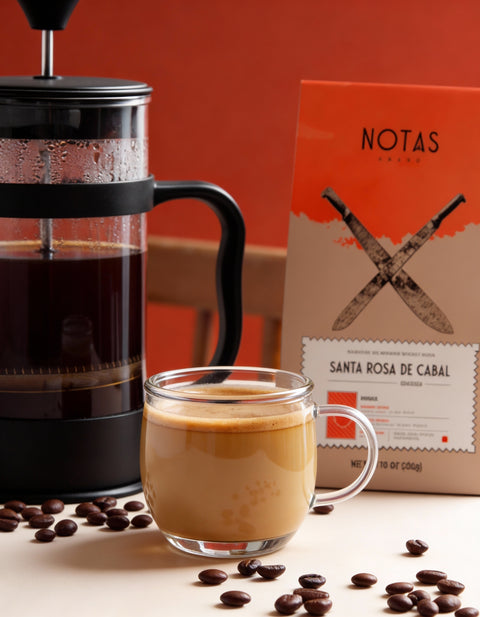
French Press
This is a full-immersion brewing method: the coffee and water remain together throughout the brewing process. It's one of the most popular home brewing methods because of its simplicity: it requires no electricity, no paper filters, and no complex pouring technique.
Tip: Stir the coffee halfway through steeping time to extract flavors evenly. Also, ensure you clean your French press after each use.
How to use
- Preheat: Rinse the French Press with hot water to warm the vessel. Discard the water.
- Dose: Add 20g of coarsely ground coffee to the bottom of the press and place it on the scale set to zero.
- Immersion: Pour 300g of hot water at 198–201°F (92–94°C), making sure all the coffee grounds are fully saturated.
- Crust and rest: A layer of coffee will form on the surface. Place the lid on top with the plunger fully raised to retain heat. Let it steep for 4 minutes.
- Break and filter: After 4 minutes, remove the lid and gently stir the surface with a spoon so the coffee grounds sink to the bottom. Replace the lid and slowly, steadily press the plunger down.
- Finish: Serve all the coffee immediately. Do not leave it in the French Press.
Suggested coffees for this method
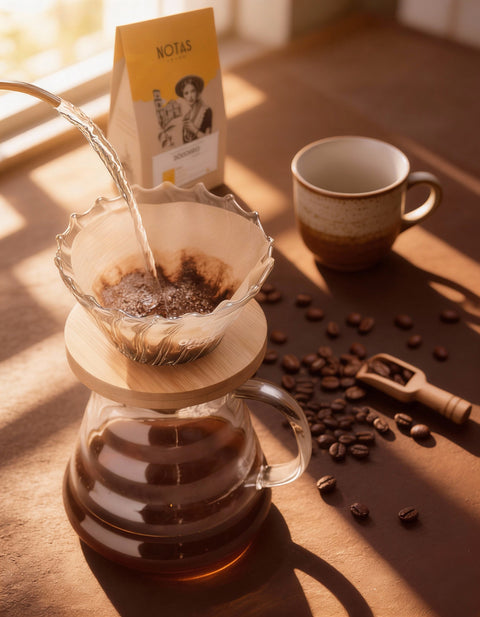
Chemex
Invented in 1941 by Peter Schlumbohm, who wanted to create a cup free of bitterness and sediment. While his goal was purely scientific, he ended up creating one of the most beautiful objects in the world of coffee. Its artistic significance is so remarkable that it is part of the collection of The Museum of Modern Art in New York.
Tip: Adjust grind size if the brew is too slow (grind coarser) or too fast (grind finer). Use freshly roasted, high-quality beans for the best flavor.
How to use
- Position the filter: Fold the filter so the three-layer side faces the spout of the Chemex. This helps keep the air channel open.
- Rinse: Pour plenty of hot water through the filter to remove any papery taste and warm the glass. Discard the water.
- Dose: Add 30g of ground coffee, level the coffee bed with gentle movements, and place the Chemex on the scale set to zero.
- Bloom: Pour 60g of water at 198°F (92°C), saturating all the coffee grounds. Wait 45 seconds to allow the gases from roasting to escape.
- Controlled pours: Pour the remaining water slowly in a circular motion, using 3 or 4 pours of approximately 150g each. Do not let the water rise to the edge of the filter.
- Finish: Remove the filter once the coffee has completely drained. Gently swirl the Chemex to aerate the brew and serve.
Suggested coffees for this method
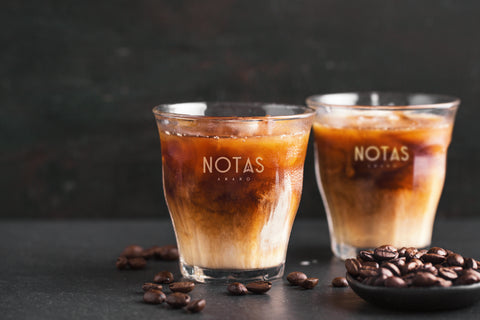
Cold Brew
This method gained global popularity in the 21st century thanks to the demand for a refreshing, low-acidity, naturally sweet beverage. The chemistry behind it is fascinating: because no heat is used to dissolve coffee compounds, the most volatile acids and bitter oils are never extracted. Instead, time becomes the key factor.
Tip: While it takes longer, cold brew results in a smooth and sweet flavor that's less acidic than most other brewing methods.
How to use
- Dose: Add 100g of coarsely ground coffee to a glass jar or Cold Brew system.
- Immersion: Pour in 500g of cold or room-temperature water.
- Mix: Gently stir with a long spoon, making sure all the coffee is fully saturated and submerged. Avoid excessive stirring — the goal is simply to eliminate trapped air bubbles.
- Rest: Cover the container. Let it sit in a cool, dark place or in the refrigerator for 16 hours. The extraction will happen slowly through diffusion.
- Filter: Once the brewing time is complete, pass the liquid through a filter. If you're using a standard jar, first strain out the larger particles and then filter again through a V60 or Chemex paper filter to remove the finer sediment.
- Storage: Pour the filtered concentrate into a clean glass bottle and store it in the refrigerator.
Suggested coffees for this method
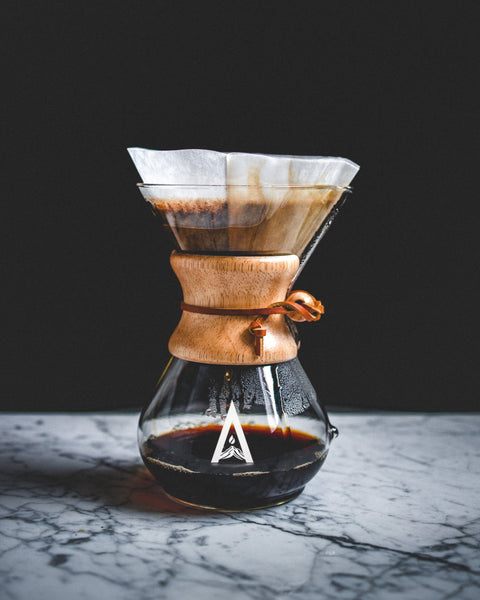
Drip Coffee
The Drip Coffee method is well-loved for its convenience and simplicity, producing a clean cup with a pleasant aroma. It works by filtering hot water through coffee grounds.
Tip: To make the best drip coffee, ensure you clean your machine regularly. This will prevent a buildup of oils and minerals that can affect the taste of your coffee.
How to use
- Fill the coffee pot with fresh, cold water.
- Place a filter paper into the coffee maker's filter basket.
- Use one heaping tablespoon of coffee grounds per cup of water.
- Turn the machine on and wait for the coffee to drip into the pot.
Suggested coffees for this method
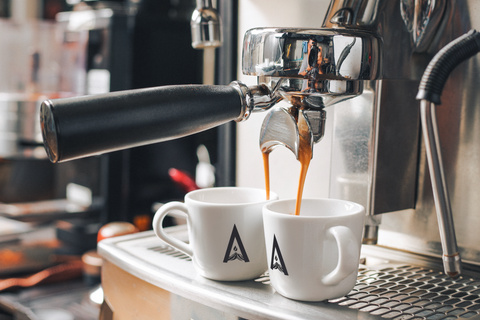
Espresso
In 1901, engineer Luigi Bezzera patented a machine that used steam to force water through ground coffee, reducing the brewing time to just seconds. Decades later, in 1947, Achille Gaggia revolutionized the system by adding a lever-operated piston capable of generating tremendous pressure, extracting the coffee's oils into a dense, golden crema.
Tip: Adjust grind size if the brew is too slow (grind coarser) or too fast (grind finer). Use freshly roasted, high-quality beans for the best flavor.
How to use
- Purge and dry: Run water through the group head for 2 seconds to remove any residue from previous extractions. Make sure the portafilter basket is completely clean and dry.
- Dose: Grind 18g of coffee and place it in the portafilter.
- Distribute: Gently tap the sides of the portafilter with your hand to level the coffee bed and eliminate air pockets.
- Tamp: Place the portafilter on a flat surface and press the coffee firmly and evenly with the tamper. The goal is to create a compact, uniform puck.
- Extract: Lock the portafilter into the group head, place the cup beneath it on the scale, then start the extraction. The espresso should flow like a thick stream of golden honey. Stop when the scale reads 36g.
Suggested coffees for this method